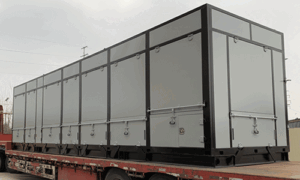
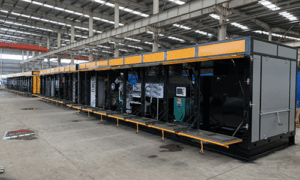
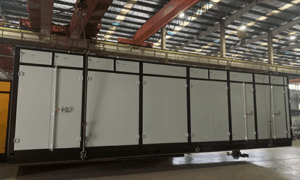
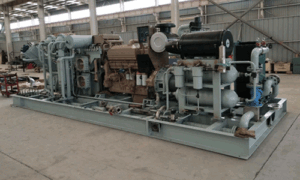
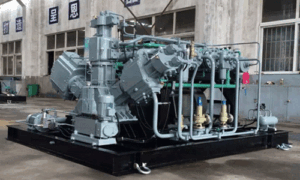
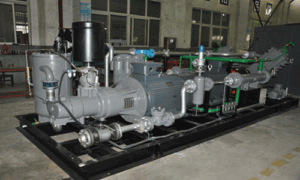
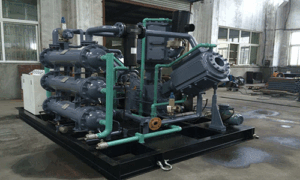
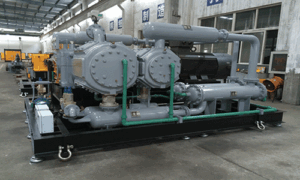
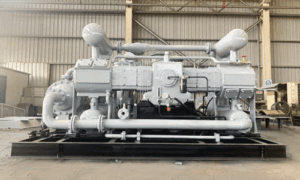
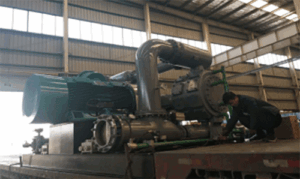
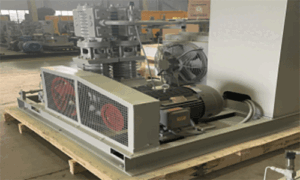
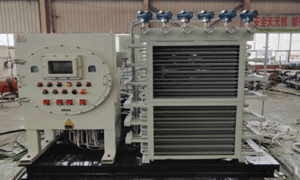
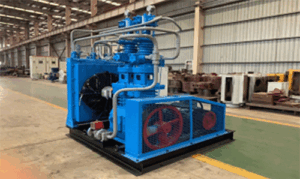
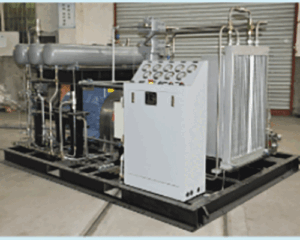
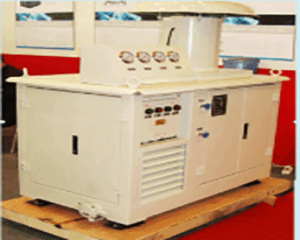
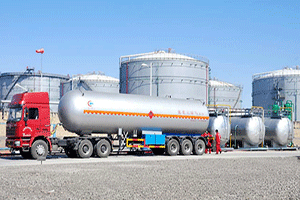
Weisidun offers customized services
for hundreds of gas compressors.
Our products include: adsorption nitrogen generators, membrane nitrogen generators, and customized compressors for various gases such as natural gas, hydrogen, biogas, oilfield gas, associated gas, wellhead gas, air, ammonia, carbon dioxide, and liquefied petroleum gas.
Brand:Weisidun
Recipiprocating piston compressor
Full Range of Gas Solutions: Nitrogen,Compression & Fire Safety – Tailored for Oil & Gas,Energy, and Environmental Industries!
- CNG compressor
- H2 compressor
- Helium compressor
- LPG compressor
- Oxygen/Nitrogencompressor
Why Us
Our Commitment to Excellence
Expertise & Experience
Taizhou WeiSiDun Power Technology Co., LTD is a professional company specializing in the research and development, production and sales of medium and high pressure compressors, mainly including adsorption nitrogen making vehicles, film nitrogen making vehicles, medium and high pressure compressors, CNG compressors, PET oil-free blowing compressors, large-displacement screw piston series medium and high pressure compressors, hydrogen/nitrogen/helium/argon oxygen and other special gas compressors.
The company fully utilizes advanced technologies from home and abroad to independently develop high-pressure compressor products. It can provide customers with various high-pressure compressors and customized services, with discharge pressures ranging from 0.7MPa to 70MPa and discharge capacities from 1m³/min to 100m³/min. Products are mainly used in oilfield gas lift, drilling, marine exploration, CNG refueling stations, biogas utilization, coalbed methane and shale gas extraction, PET blow molding, hydropower stations, leak detection, purging, shipbuilding, and military industries.
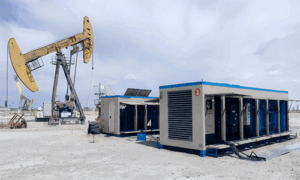
| Compressor product introduction-nitrogen injection system | |
![]() |
|
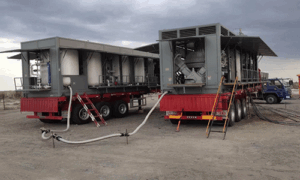
| Adsorption nitrogen generation system(WSDZD-1200/350-99%-P) | |
![]() | ![]() |
| Technical Parameter | Features |
|
|
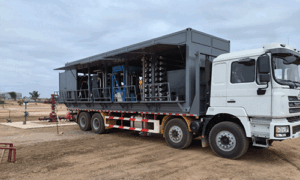
| Membrane nitrogen generation system(MZD-1200/500-95%-C) | |
![]() | ![]() |
| Technical Parameter | Features |
|
|
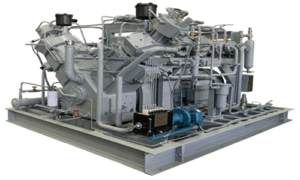
| Compressor product introduction-high pressure air compressor | |
![]() |
|
| Case1: Screw & piston compressor(WSD2VF-20/500-P) | |
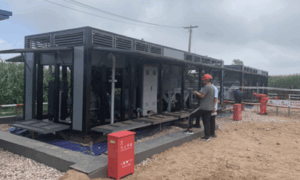
![]() | ![]() |
| Technical Parameter | Features |
|
|
| Case2: Screw & piston compressor(WSDLG.V-25/220-C) | |
![]() | ![]() |
| Technical Parameter | Features |
|
|
| Case3: Piston type high-pressure air compressor(WSD-5/350) | |
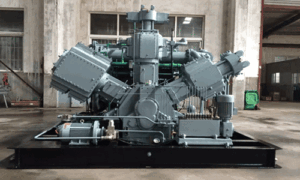
![]() | ![]() |
| Technical Parameter | Features |
|
|
| Compressor Product Introduction-Oil-Free Compressor (PET) Series | |
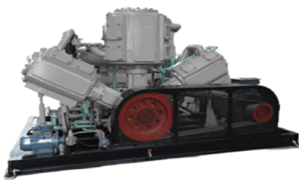
![]() |
|
| Case 1 Screw & piston compressor(WSD.VW-20/40) | |
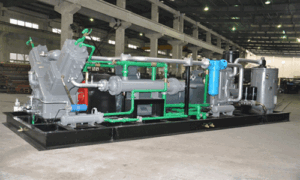
![]() | ![]() |
| Technical Parameter | Features |
|
|
| Case2 W type(WSTW-15/40-P) | |
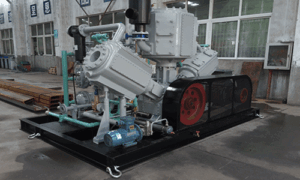
![]() | ![]() |
| Technical Parameter | |
| Intake pressure:0 MPa Exhaust pressure:4 MPa Flow:900m³/h Matching power:185kW | |
| Case3 M type(MW-20/40-P) | |
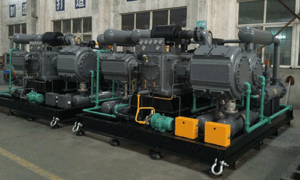
![]() | ![]() |
| Technical Parameter | |
| Intake pressure:0 MPa Exhaust pressure:4 MPa Flow:1200m³/h Matching power:220kW | |
| Compressor product introduction-high pressure air compressor | |
![]() |
|
| Case1: Screw & piston compressor(WSD2VF-20/500-P) | |
![]() | ![]() |
| Technical Parameter | Features |
|
|
| Case2: Screw & piston compressor(WSDLG.V-25/220-C) | |
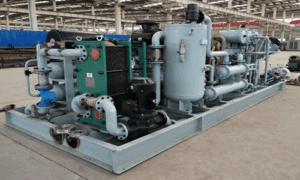
![]() | ![]() |
| Technical Parameter | Features |
|
|
| Case3: Piston type high-pressure air compressor(WSD-5/350) | |
![]() | ![]() |
| Technical Parameter | Features |
|
|
| Compressor Product Introduction – Process Gas Compressor Series | |
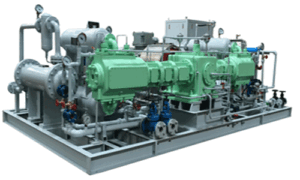
![]() |
|
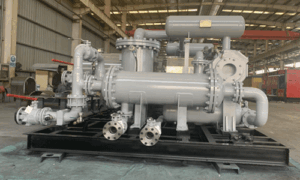
| Case 1 Hydrogen compressor(DW-14/(9-13.5)-P) | |
![]() | ![]() |
| Technical Parameter | Features |
| Intake pressure:0.01-0.03 MPa Exhaust pressure:0.3 MPa Flow:44 m³/min Matching power:220kW | Oil-free |
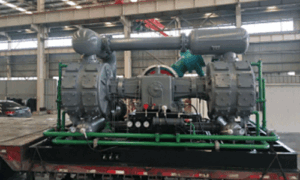
| Case 2 Desorption gas compressor(DW-83/0.1-2) | |
![]() | ![]() |
| Technical Parameter | Features |
|
|
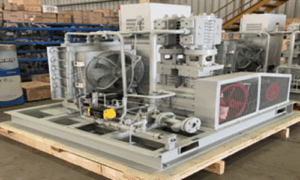
| Case 3 Nitrogen compressor(ZWF-0.58/5-30) | |
![]() | ![]() |
| Technical Parameter | Features |
|
|
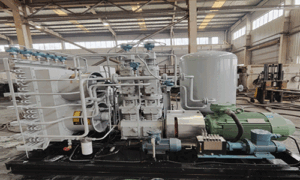
| Case 1 Helium compressor(ZF-0.75/210) | |
![]() | ![]() |
| Technical Parameter | Features |
|
|
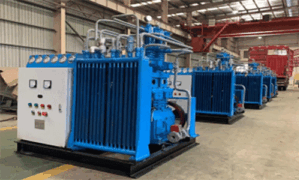
| Case 1 Oxygen compressor(ZW-0.58/4-150) | |
![]() | ![]() |
| Technical Parameter | Features |
|
|
| Compressor Product Introduction – Process Gas Compressor Series | |
![]() |
|
| Case 1 Hydrogen compressor(DW-14/(9-13.5)-P) | |
![]() | ![]() |
| Technical Parameter | Features |
|
|
| Case 2 Desorption gas compressor(DW-83/0.1-2) | |
![]() | ![]() |
| Technical Parameter | Features |
|
|
| Case 3 Nitrogen compressor(ZWF-0.58/5-30) | |
![]() | ![]() |
| Technical Parameter | Features |
|
|
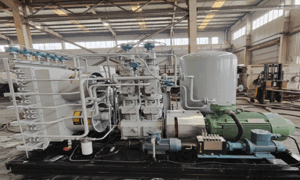
| Case 1 Helium compressor(ZF-0.75/210) | |
![]() | ![]() |
| Technical Parameter | Features |
|
|
| Case 1 Oxygen compressor(ZW-0.58/4-150) | |
![]() | ![]() |
| Technical Parameter | Features |
|
|
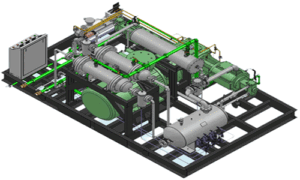
| Natural Gas (CNG) Refueling Station Compressor Series | |
![]() |
|
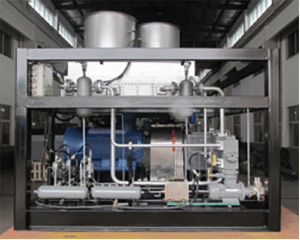
| Natural Gas (CNG) Refueling Station Compressor Series | ||
![]() | ![]() | ![]() |
| Standard Station (D Series) | Sub-station (ZF/VF/DF series) | Natural gas refueling station – domestic use |
Tell your specific requipment immediately.
Contact us today to schedule a consultation or to learn more about our services.
Solutions & Key Applications
We have accumulated rich practical experience, with case studies covering gas energy, petrochemicals, instrumentation and air separation, metallurgy and mining, oilfield gas lift, and other fields, and can provide complete solutions.
Gas energy
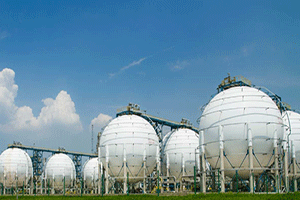
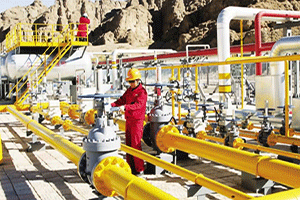
Natural gas compressors are used in gas extraction, transportation, storage, and the natural gas chemical industry, as well as for associated gas recovery from oil wells, natural gas compressor cylinder filling, and natural gas refueling mother/daughter stations. LNG storage facilities contain volatile flash vapor (BOG gas). To fully utilize this gas, it can be recovered by pressurizing the BOG to a certain pressure using a compressor. Natural gas transmission equipment and pipeline transmission systems provide safe, reliable, stable, and high-performance natural gas pipeline compressor units.
Petrochemical
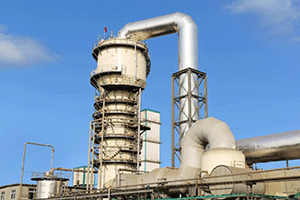
Process compressors for the petrochemical industry are used in oil extraction, refining, and fine chemical processes. Examples include hydrogen compressors for hydrogen production systems in hydrogenation units, benzene hydrogenation, tar hydrogenation, C9 hydrogenation, and catalytic cracking processes. Ammonia compressors, feedstock gas compressors, and syngas compressors are used in ammonia synthesis units; syngas compressors and carbon dioxide compressors are used in methanol plants.
Instrument air separation
The compressor for instrument air separation is directly driven by an electric motor, which rotates the crankshaft, causing the connecting rod to reciprocate the piston. Fresh air is forced through a filter into the compressor cylinder, and once the gas reaches a certain pressure, it is discharged to the air separation system storage tank for use by pneumatic instruments. Other applications include PSA nitrogen/oxygen generators and membrane separation air separation compressors (such as air boosters/nitrogen boosters/oxygen boosters).
Metallurgical and Mining Industries
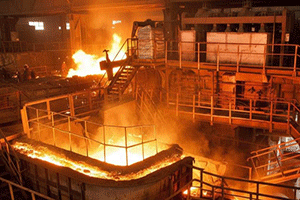
In the metallurgical and mining industries, compressors are essential key equipment, with displacement ranging from 1.0 to 40 cubic meters and discharge pressure up to 25 MPa. They can be divided into two main categories: those with foundations and those without foundations, and include more than 100 varieties such as stationary, mobile, air-cooled, water-cooled, electric, and diesel-powered types.
Oilfield Gas Lift
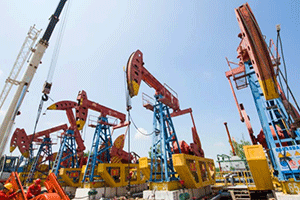
Operations in the oil and gas extraction field include oxygen reduction and air/nitrogen injection, gas lift, special downhole operations, nitrogen foaming, heat insulation and drainage assistance, nitrogen-assisted steam injection thermal recovery, pipeline purging, well pressure washing, sand flushing, etc.
Other fields
Ammonia/biogas compressors for desulfurization/denitrification in environmental protection projects of thermal power plants/biogas power plants. Freon compressors for refrigerant manufacturers, etc.
FAQ
1. Low voltage: The rated operating voltage of a typical compressor is 380V, with a permissible fluctuation of about 5%.
2. Loose wiring: Check the input power cord for signs of overheating or burning.
3. Unit pressure exceeding rated pressure: For example, a machine rated at 0.7MPa may experience overload if the actual pressure reaches 0.75MPa.
4. Oil separator clogged: Don't assume that recently replaced parts are clog-free. A dirty working environment and impurities in the oil-gas separator can easily cause blockage.
5. Contactor malfunction: Replace with a new one…
The lubricating oil is too thin (the oil temperature is high and the grade does not meet the requirements).
2. Excessive oil pressure in the lubricant.
3. The gap between the piston and the cylinder is too large;
4. Cylinder is out of round or has excessive wear;
5. Cylinder Oil Leakage:
(The piston rings have been excessively worn and have lost their elasticity.)
(2) The piston ring is firmly engaged in the ring groove.
(3) The gap between the piston ring and the ring groove is too large;
(4) Installing the wrong piston ring.
6. Excessive clearance in the crankshaft bearing or connecting rod bearing;
7. Excessive temperature in the crankcase or poor ventilation;
8. If the oiling rod lubricated by splash lubrication is too long or if the oil level in the crankcase is too high, it will cause problems.
Abnormal exhaust temperature means that it is higher than the designed value. In theory, the factors that affect the increase of exhaust temperature include: intake air temperature, pressure ratio, and compression index (for air compression index K = 1.4). In reality, factors that affect the high intake air temperature include: low intermediate cooling efficiency, or excessive scale deposits in the intercooler affecting heat exchange, then the intake temperature of the subsequent stages will inevitably be high, and the exhaust temperature will also be high. Additionally, valve leakage and piston ring leakage not only affect the increase of exhaust temperature, but also cause pressure changes between stages. As long as the pressure ratio is higher than the normal value, the exhaust temperature will increase. Moreover, for water-cooled machines, insufficient water or insufficient water volume will cause the exhaust temperature to rise.
If the volume of gas discharged by the compressor cannot meet the flow requirements of the user at the rated pressure, the exhaust pressure will inevitably have to be reduced. At this point, another machine with the same exhaust pressure but a larger volume must be replaced. The main reason for abnormal inter-stage pressure is leakage of the valve or leakage after the piston ring wears out. Therefore, the causes should be sought from these aspects and measures should be taken.
Where there is friction such as between the crosshead and the slide plate, or between the packing and the piston rod, if the temperature exceeds the specified value, it is called overheating. The consequences of overheating are as follows: one is to accelerate the wear between the friction pairs; the other is that the accumulated heat energy continuously accumulates until it burns the friction surface, causing major accidents to the machine. The main reasons for bearing overheating are: the non-uniform fit between the bearing and the shaft neck or the small contact area; the bearing is skewed or the crankshaft is bent, the viscosity of the lubricating oil is too low, the oil passage is blocked, the oil pump has a malfunction and causes oil supply interruption, etc.; during installation, the level was not adjusted, the clearance was not found properly, the main shaft and the motor shaft were not aligned, and the two shafts were tilted, etc.
If certain components of the compressor malfunction, abnormal noises will be emitted. Generally speaking, operators can identify these abnormal noises. For instance, if the gap between the piston and the cylinder head is too small and there is direct impact; if the connecting nut of the piston rod and the piston is loose or disengaged; if the threaded plug at the piston end is damaged, and the piston moves upward and collides with the cylinder head; if metal fragments fall into the cylinder or water accumulates in the cylinder, all these can cause knocking sounds inside the cylinder. In the crankcase, if the bolts, nuts, connecting rods, and crosshead bolts of the crankshaft are loose, disengaged, or broken, and if the shaft diameter is severely worn and the gap increases, or if the clearance between the crosshead pin and the bushing is too large or severely worn, etc., all these can cause knocking sounds in the crankcase. If the exhaust valve plate breaks, the valve spring is soft or damaged, or the load regulator is set improperly, etc., all these can cause knocking sounds in the valve chamber. By identifying the faults and taking measures accordingly.